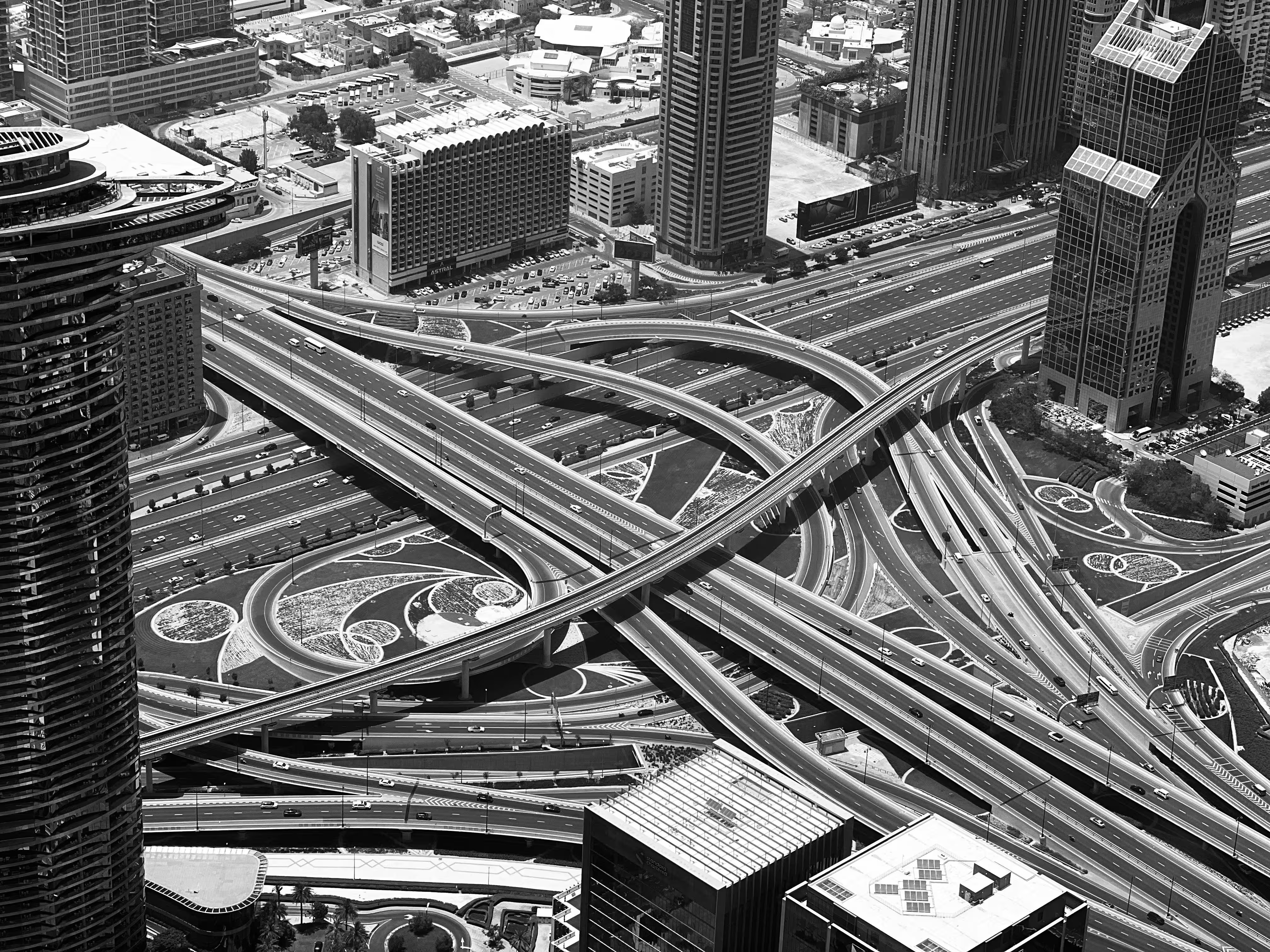
The Impact of Freezones on Development in the UAE
The United Arab Emirates (UAE) has long been recognized as a global hub for business, innovation, and trade. One of the critical drivers of this success is the establishment of freezones—special economic zones offering unique incentives to attract foreign investment and promote economic diversification. Since their inception, freezones have played a transformative role in the UAE’s development, contributing significantly to its economy, infrastructure, and global standing. Here’s an in-depth look at how freezones have impacted the UAE’s development.
What Are Freezones?
Freezones are designated areas where businesses can operate with specific benefits, including full foreign ownership, tax exemptions, simplified customs procedures, and access to state-of-the-art infrastructure. The UAE is home to over 40 freezones, each tailored to different industries, such as:
Dubai Multi Commodities Centre (DMCC): Focused on trade and commodities.
Jebel Ali Free-Zone (JAFZA): A major hub for logistics and manufacturing.
Dubai Internet City (DIC): A technology-focused freezone fostering innovation in IT and digital industries.
Abu Dhabi Global Market (ADGM): A financial hub offering a conducive environment for banking and investment firms.
Economic Growth and Diversification
One of the most significant impacts of freezones is their contribution to economic growth and diversification. By attracting foreign direct investment (FDI), these zones have:
Increased Non-Oil Revenues: Freezones have helped reduce the UAE’s dependency on oil by encouraging growth in sectors like logistics, technology, manufacturing, and finance.
Boosted GDP Contribution: According to government statistics, freezones contribute a significant percentage to the UAE’s GDP, underscoring their role as economic engines.
Employment and Talent Attraction
Freezones have created thousands of job opportunities, fostering employment and attracting global talent to the UAE. Key contributions include:
Skilled Workforce Development: Freezones attract experts and professionals from around the world, enriching the local talent pool.
Entrepreneurship and SMEs: Many freezones offer support to startups and small and medium enterprises (SMEs), encouraging innovation and entrepreneurship.
Infrastructure Development
To support the operations of businesses within freezones, the UAE has invested heavily in world-class infrastructure:
Modern Facilities: Freezones offer high-quality office spaces, warehouses, and industrial zones tailored to specific industries.
Transportation Links: Ports, airports, and road networks have been developed or enhanced to facilitate trade and logistics.
Digital Connectivity: Technology-focused freezones have become hubs for IT and innovation, supported by advanced digital infrastructure.
Global Trade and Investment Hub
The strategic positioning and policies of freezones have cemented the UAE’s status as a global trade and investment hub:
Ease of Doing Business: Simplified regulations and fast-track licensing procedures make freezones highly attractive to investors.
Export Growth: Freezones contribute significantly to the UAE’s export sector by serving as trade gateways to global markets.
Attracting Multinationals: Companies like Microsoft, IBM, and Nestle have set up regional headquarters in the UAE’s freezones, further enhancing the country’s global reputation.
Encouraging Innovation and Industry-Specific Growth
Specialized freezones have spurred innovation and growth in various industries:
Technology and Media: Dubai Internet City and Dubai Media City have nurtured a thriving ecosystem of tech companies, startups, and media enterprises.
Finance and Banking: Freezones like ADGM and Dubai International Financial Centre (DIFC) have attracted global financial institutions, fostering a robust financial sector.
Healthcare: Dubai Healthcare City has become a leading destination for medical tourism and healthcare innovation.
Challenges and Future Outlook
While freezones have brought immense benefits, there are challenges to address:
Market Saturation: The proliferation of freezones has led to increased competition, requiring differentiation and strategic positioning.
Regulatory Harmonization: Ensuring consistency between freezone and mainland regulations can enhance business operations.
Looking ahead, the UAE’s freezones are poised to evolve further, focusing on sustainability, digital transformation, and industry-specific innovation. The continued development of smart freezones and integration with global markets will ensure their relevance in a rapidly changing economic landscape.
Conclusion
Freezones have been instrumental in shaping the UAE’s transformation into a global economic powerhouse. By attracting foreign investment, fostering innovation, and supporting infrastructure development, they have significantly contributed to the country’s diversification goals. As the UAE continues to adapt to global trends, its freezones will remain at the heart of its growth strategy, driving progress and enhancing its global standing.